
I’d plan to repaint most interior walls every 5–10 years, but I’d check their condition before picking a date. Busy or damp rooms may need paint sooner; clean, low-traffic rooms can wait longer.
Here’s how I’d decide:
- Check the room: Hallways often need paint every 2–4 years, children’s rooms every 2–5, kitchens every 3–5, and bathrooms or laundry rooms every 3–6. Bedrooms and formal living or dining rooms often last 5–10 years.
- Try the smallest fix first: Gently clean intact paint, then touch up small marks with matching paint. Repaint a wall when stains, fading, or mismatched patches remain; repaint the room when wear affects several walls.
- Fix damage before painting: <u>Peeling, bubbles, or returning mildew need more than another coat.</u> I’d address moisture, repair damaged surfaces, and prepare the walls first.
- Help the finish last: Choose paint suited to the room, limit sun exposure and rubbing, and follow the maker’s cleaning and curing instructions.
My rule: repaint when cleaning and small repairs no longer leave an even, sound finish – not just because a certain number of years has passed.
How Often to Paint a Home’s Interior
sbb-itb-a2baf13
Repainting Timelines by Room
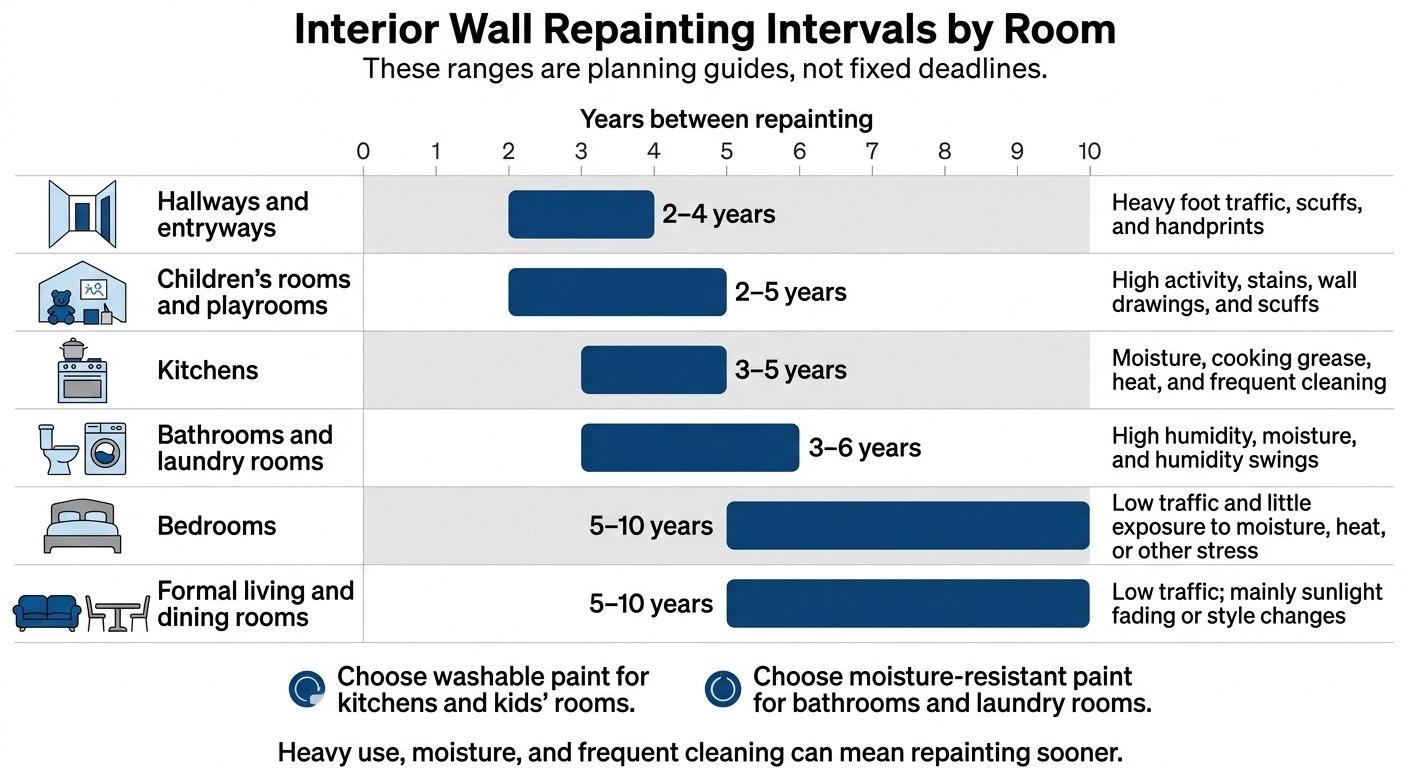
Interior Wall Repainting Intervals by Room
How you use a room helps determine when it needs repainting. These ranges are planning guides, not fixed deadlines.
| Room | Typical repainting interval | Main causes of wear |
|---|---|---|
| Kitchens | 3–5 years | Moisture, cooking grease, heat, and frequent cleaning |
| Hallways and entryways | 2–4 years | Heavy foot traffic, scuffs, and handprints |
| Children’s rooms and playrooms | 2–5 years | High activity, stains, wall drawings, and scuffs |
| Bathrooms and laundry rooms | 3–6 years | High humidity, moisture, and humidity swings |
| Bedrooms | 5–10 years | Low traffic and little exposure to moisture, heat, or other stress |
| Formal living and dining rooms | 5–10 years | Low traffic; mainly sunlight fading or style changes |
Choose durable, washable paint for kitchens and kids’ rooms, and moisture-resistant paint for bathrooms and laundry rooms.
Heavy use, moisture, and frequent cleaning can mean repainting sooner. The next section explains why.
What Shortens Interior Paint’s Life?
Daily Wear and Sunlight
Children, pets, bags, and furniture can wear down paint through repeated contact. Rubbing can also cause burnishing – shiny patches that cleaning won’t remove. Check walls near switches, hallway corners, and chair backs, where contact is frequent. Doorstops and space between furniture and walls can help prevent rubbing.
Direct sunlight can fade paint while spots behind pictures or bookcases keep their original color. Blinds, curtains, or UV-filtering window treatments help limit exposure. Before touching up a sunlit wall, test the paint in several spots: it may not match the older paint’s color or sheen. Wear often appears as scuffs, fading, or dull spots. When scuffs or fading cover large areas, touch-ups may no longer be enough.
Moisture and Poor Surface Preparation
Fix moisture and adhesion problems before repainting. Repair leaks, run exhaust fans during and after showers or cooking, and let affected walls dry thoroughly. Then prepare the surface: remove grease, dust, mildew, and loose coating. Sand repairs and dull glossy spots before priming, and apply primer where needed. Painting over damp or contaminated walls can cause the new paint to peel or bubble.
Once you’ve fixed the moisture problem and the surface is sound, it’s easier to assess the remaining damage. A repainting schedule won’t help until those surface problems are addressed.
Paint Durability and Cleaning
Durability depends on the paint’s formula and how it’s applied – not its price. Compare washability and stain-resistance claims, and choose a sheen that suits how the wall is used. Satin or eggshell can balance looks with ease of cleaning. Higher-gloss finishes generally clean more easily, but they can make surface flaws stand out. Low- or zero-VOC paint isn’t automatically more durable. EPA guidance recommends weighing durability alongside VOC content.
Dust before washing. Then use a soft, damp cloth and a mild cleaner recommended by the paint maker. Test a hidden spot first, don’t soak the wall, and avoid abrasive pads or hard scrubbing that can leave shiny patches. Follow the coating’s cure instructions before cleaning it for the first time. Some products recommend waiting at least two weeks – dry to the touch doesn’t mean ready to wash.
Washability and proper cleaning can help paint last longer, but they can’t repair a failing finish. The next section covers when to repaint if cleaning no longer restores it.
Signs Your Walls Need Repainting
Stubborn Stains, Fading, and Scuffs
When cleaning and touch-ups no longer restore the finish, it’s time to repaint.
Touch up only small marks when the finish is sound and you have matching paint. If gentle cleaning doesn’t remove a stain or mark, repaint the wall. When stubborn stains, scuffs, fading, or uneven color affect a large area, painting the full wall usually gives a cleaner result.
Peeling, Bubbling, and Returning Mildew
Flaking, cracking, and bubbles point to a failed coating or a problem with the surface underneath. Soft or swollen drywall, water rings, and musty discoloration near windows, ceilings, plumbing, or exterior walls call for a moisture inspection. Damaged drywall may need repair or replacement before you paint.
Fix the moisture source first. If mildew keeps coming back, the wall isn’t ready for paint. Extensive growth, damaged porous drywall, or mildew that repeatedly returns may require a mold remediation professional.
Powdery Paint and Visible Patches
Lightly rub a suspected chalky area with a clean, dark cloth. If powder transfers to the cloth, the finish may be chalking. Chalking across large areas means the coating needs preparation before repainting – not just another coat.
Check touch-ups in daylight and normal room lighting. If differences in color, sheen, or texture still stand out, repaint to a wall edge, corner, or trim line.
Should You Clean, Touch Up, or Repaint?
If the paint is intact, start with cleaning. Dust the wall, then test a mild, nonabrasive cleaner on a hidden spot. If the mark comes off and the sheen stays even, cleaning may be all you need. If not, consider a touch-up or repaint. Use the chart below to choose the fix that involves the least work.
| Option | Suitable condition | Benefit | Limitation |
|---|---|---|---|
| Clean | Surface dirt, fingerprints, or light scuffs on intact paint | Cleans the wall without repainting | Won’t fix fading or damage; harsh cleaning can dull the finish |
| Touch up | Small, isolated marks or minor repairs when matching paint is available | Limits work to the damaged spot | Differences in color, sheen, or texture may still show |
| Repaint the affected wall | Numerous marks, fading, or uneven repairs | Gives one wall a more uniform finish | Requires more prep and paint |
| Repaint the room | Wear throughout the room or visible color or sheen mismatch | Keeps color and sheen consistent across the room | Takes more time and materials |
For touch-ups, use leftover paint in good condition when possible. Apply it with the original brush or roller to help the repaired spot blend in.
A professional assessment can identify where patching, sanding, priming, or moisture repairs are needed before repainting. Address underlying moisture damage and adhesion problems before cosmetic work.
Conclusion: Repaint Based on Wall Condition
Repaint when cleaning and small touch-ups can no longer restore an even finish with intact paint. Fix recurring moisture damage or adhesion problems first.
FAQs
Is my leftover paint still usable for touch-ups?
Leftover paint works best for touch-ups when it’s less than a year old. Paint older than two to three years often leaves patches that don’t match, since UV exposure and other conditions cause fading. Stick with the exact same brand, color, and sheen.
Don’t have the original paint? Take a quarter-sized paint chip from a hidden spot to a paint store for professional scanning.
Do I need primer when repainting interior walls?
Yes. Primer helps paint stick to walls, reducing peeling, flaking, and bubbling. It also seals porous surfaces, covers patched areas, and helps paint absorb evenly for a durable, professional finish.
For best results, prime the entire surface, not just a few spots, to avoid an uneven finish. Pick a primer that suits the surface and room, such as a moisture-resistant option for kitchens or bathrooms.
How can I tell if wall stains are moisture-related?
Check for peeling, bubbling, blistering, or cracking paint. These signs can point to trapped water or high humidity. Apply a few drops of bleach to the stain. If it fades or disappears, it’s likely moisture-related mold rather than dirt.
For a more technical check, use a moisture meter to determine whether the wall’s moisture content is above recommended levels. Looks alone can be misleading.