
Yes, you should paint your home before selling. Here’s why:
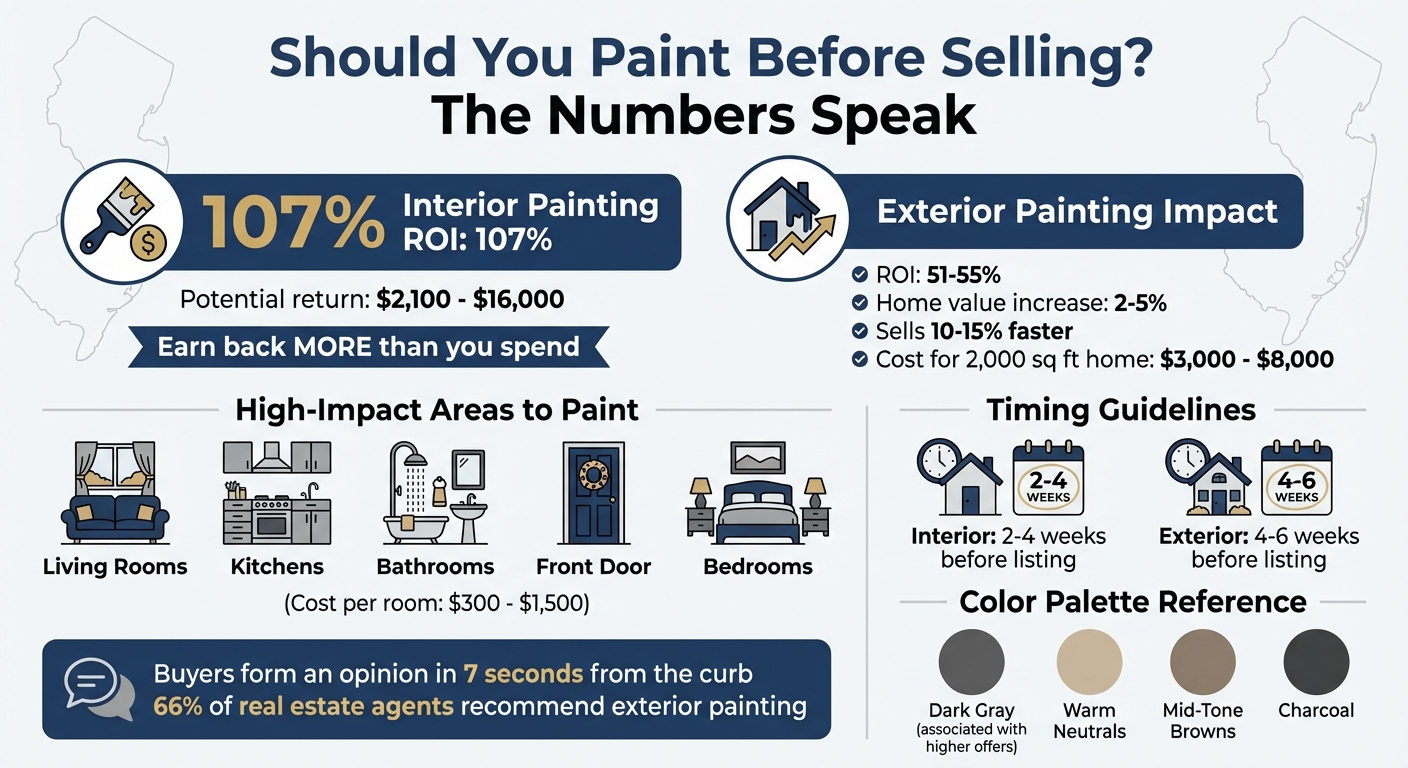
- Interior painting offers a 107% ROI, meaning you can earn back more than you spend – typically between $2,100 and $16,000.
- Neutral colors like dark gray and warm tones appeal to buyers, helping them envision living in the space.
- Exterior painting boosts curb appeal, increasing a home’s value by 2–5% and helping properties sell 10–15% faster.
- Focus on high-impact areas: living rooms, kitchens, bathrooms, and the front door. These areas leave the strongest impression on buyers.
- Professional painting ensures clean, even finishes that signal a well-maintained property.
Timing tips:
- Schedule interior painting 2–4 weeks before listing.
- Plan exterior painting 4–6 weeks in advance, especially in spring or early fall.
Painting is a cost-effective way to make your home stand out in a competitive market. Stick to neutral tones, prioritize key areas, and hire professionals for the best results.
ROI and Benefits of Painting Your Home Before Selling
How Painting Affects Home Value and Buyer Interest
Interior Painting Returns
When it comes to home improvements, interior painting stands out as one of the best investments. It boasts an impressive ROI of about 107%, meaning you could earn back more than you spend. For homeowners in New Jersey, this could mean a return ranging from $2,100 to $16,000, depending on the size and scope of the project.
A fresh coat of paint does more than just brighten a room – it sends a message. It tells buyers the home is move-in ready, sparing them from dealing with touch-ups or DIY projects. Hiring a professional painting company ensures clean lines and an even finish, avoiding the patchy or uneven results that can come with amateur efforts.
While an updated interior can make a strong impression, the exterior is just as crucial for attracting buyers.
Exterior Painting Returns
The exterior of a home is like its handshake – it’s the first thing buyers notice. A newly painted exterior not only enhances curb appeal but also increases a home’s value by 2% to 5%, even though its ROI typically falls between 51% and 55%. First impressions matter, and buyers often form their opinion of a property within just 7 seconds of seeing it from the curb. If the exterior looks neglected, some buyers may not even make it to the front door, let alone schedule a showing.
Statistics back this up: 66% of real estate agents recommend exterior painting before listing a home, and freshly painted exteriors can help homes sell 10% to 15% faster. For a standard 2,000-square-foot home, the cost of exterior painting generally falls between $3,000 and $8,000. Once buyers are drawn in by the exterior, a well-maintained and updated interior can help close the deal.
sbb-itb-a2baf13
Which Rooms to Paint for Maximum Return
Living Rooms, Kitchens, and Bathrooms
Spaces like living rooms, kitchens, and bathrooms are the heart of any home and often leave the strongest impression on potential buyers. A fresh coat of paint in these high-traffic areas not only updates the overall look but also signals care and upkeep, creating an inviting, move-in-ready vibe.
"Fresh paint is one of the cleanest investments a seller can make. A coat of warm, neutral paint throughout the main living areas makes a home feel updated, well-maintained, and move-in ready."
- Scott Selleck, REALTOR®, The Selleck Group at KW City Views Realty
From a financial standpoint, this is a smart move. Most agents recommend painting these spaces, and the cost for professional painting typically runs between $300 and $1,500 per room. Kitchens, in particular, benefit from small updates like a fresh coat on cabinets, which can dramatically modernize the space.
Once the main living areas are addressed, shifting focus to bedrooms can further elevate a home’s appeal.
Bedrooms and Accent Walls
Bedrooms are another area where paint can make a big difference. Outdated colors like beige or plain white can feel uninspired, while modern hues – such as navy or deep blues – create a calming, stylish atmosphere that resonates with today’s buyers.
Accent walls are a budget-friendly way to add character without overwhelming the space. They work especially well in bedrooms, drawing attention to features like the wall behind a headboard. To achieve this, choose complementary colors: pair lighter walls with a darker accent or brighten a room with a light-toned feature wall. Best of all, creating an accent wall is cost-effective, often requiring just one gallon of premium paint to achieve a polished, layered look with two coats.
Painting Your Home to Sell – 7 Things You Must Know!
Selecting Paint Colors That Appeal to Buyers
Picking the right paint colors can do more than just freshen up a space – it can boost your home’s marketability and even its value. Neutral and warm tones are especially effective at creating an inviting atmosphere that appeals to a wide range of buyers.
Best Neutral Colors for Interiors
Neutral tones have evolved over the years, with dark gray now taking the spotlight. This color has become a favorite for its ability to create a sleek, modern aesthetic that resonates with buyers.
"Dark gray is associated with higher offer prices than white in every room of the home." – Zillow
Dark gray and charcoal shades are versatile and work beautifully in living rooms, kitchens, and bathrooms. These colors provide a clean, contemporary backdrop that helps buyers imagine their own furniture and decor in the space. For kitchens in particular, charcoal gray adds a sophisticated, modern vibe that aligns with current buyer preferences.
When choosing a specific shade, always test swatches on your walls. Lighting and surrounding elements can dramatically alter how the color appears. For high-traffic areas, a satin finish is a practical option – it’s durable, easy to clean, and still looks stylish.
While dark grays are excellent for a modern look, mid-tone browns can introduce a touch of warmth to balance the space.
Adding Warmth with Mid-Tone Browns
Mid-tone browns are a great way to add warmth without straying from a neutral palette. These earthy tones work particularly well as accent walls in bedrooms or smaller spaces, creating a cozy and inviting feel.
The growing trend of "color drenching" has been gaining popularity, especially among homeowners in New Jersey prepping their homes for sale. This approach involves using deeper, moodier tones – like rich browns – in selected areas to add depth and visual interest. Pairing these darker hues with lighter neutral walls can prevent rooms from feeling flat while maintaining a balanced look.
For the best results, steer clear of overly bold or bright colors, as these can turn off potential buyers. Instead, focus on tones that enhance the space’s appeal and help buyers picture themselves living there.
Exterior Paint and First Impressions
First impressions matter, especially when it comes to a home’s exterior. Buyers often decide how they feel about a property within seconds of seeing it. A fresh, well-maintained exterior sends a message of care and upkeep, while peeling or faded paint can raise red flags about potential maintenance issues. While interior paint can spark interest once buyers step inside, the exterior is what draws them in initially. In competitive areas like Rumson and Monmouth County, curb appeal can make all the difference.
"In Rumson, where stately homes line tree-shaded streets, a polished exterior can set your property apart."
Choosing the right exterior colors is a natural next step in ensuring your home makes a great first impression.
Choosing Exterior Colors for Your Neighborhood
In New Jersey, popular exterior colors include black, gray, white, and other neutral shades. These tones tend to resonate with a wide range of buyers in the Northeast. Dark gray, in particular, has gained traction and is often linked to higher offer prices. For front doors, bold black is a standout choice that can boost appeal, whereas mid-tone gray doors might have the opposite effect and lower perceived value.
When selecting colors, start with the fixed elements of your home – such as the roof or stonework – and then pick complementary shades for siding, trim, and accents. Professionals suggest working with three to four colors and using foam board samples to see how they look in different lighting throughout the day. Aligning your color choices with the architectural style of your neighborhood can help your home stand out in a welcoming way.
When to Touch Up vs. Fully Repaint
Once you’ve chosen the perfect colors, the next step is deciding between touch-ups and a full repaint. A complete repaint isn’t always necessary. If the current paint is in good condition with only minor signs of wear, targeted touch-ups can make a big impact. Focus on high-visibility areas like the front door, trim, or spots where paint is peeling to achieve that "well-maintained" appearance buyers love.
"We often recommend targeted updates rather than full renovations to maximize value without over-investing."
- Ten Hoeve Advisory
For homes with vinyl siding, there’s no need for a full replacement. High-quality exterior paints can give your home a fresh, modern look. The goal is to create an exterior that looks cared for and inspires confidence from the very first glance.
When to Schedule Painting Before Listing
Timing matters when painting your home before putting it on the market. The goal is to have your home looking fresh, odor-free, and ready for photos by the time it’s listed. To avoid rushing and compromising quality, work backward from your planned listing date.
Start by consulting your real estate agent about the local market. In slower markets, where homes tend to sit longer, a fresh coat of paint can make your property stand out and sell faster. On the flip side, in competitive seller’s markets, buyers may be more willing to handle updates themselves, so extensive painting might not be as critical. Your agent can guide you on which areas to prioritize for maximum impact.
Interior Painting Timeline
For interior painting, aim to finish the work 2 to 4 weeks before your listing date. This gives paint odors time to fade and ensures the home is ready for staging and showings. If you’re short on time, focus on the most visible areas first – like the front door, kitchen, and main living spaces. Secondary spaces, such as closets or guest bedrooms, can take a back seat.
Before painting, tackle any structural repairs or leaks. Cosmetic updates won’t conceal larger issues, and addressing them upfront ensures a smoother process.
Exterior Painting Timeline
Exterior painting requires more planning due to its dependence on weather conditions. In New Jersey, for example, the best time to paint outside is late spring through early fall, when temperatures are consistently above 50°F and humidity is lower. Professional exterior painting for a 2,000 sq. ft. home typically costs between $3,000 and $8,000.
Schedule exterior painting at least 4 to 6 weeks before listing. This timeframe accounts for potential weather delays and the prep work involved, such as power washing, scraping, priming, and caulking. Rushing exterior painting in poor weather can lead to poor adhesion and reduced durability, so it’s worth taking the time to do it right.
Conclusion
Pre-listing painting is a smart investment that enhances buyer appeal without breaking the bank. With interior painting yielding returns of about 107% and exterior updates making a noticeable difference, a fresh coat of paint can transform your home’s presentation. It helps your property feel well-maintained, move-in ready, and more attractive compared to homes showing signs of wear. These numbers highlight just how much a simple paint job can influence buyer perception and market outcomes.
While the median homeowner spends $24,000 on various renovations, a $3,000 paint job often delivers a more impactful return on investment. As REALTOR® Scott Selleck wisely notes:
"The goal isn’t to spend the most before you sell. The goal is to sell for the most."
Fresh paint not only reduces potential buyer objections but also signals that the home has been cared for, making it easier for buyers to picture themselves living there.
To get the most out of your investment, focus on areas with high buyer impact, such as the living room, kitchen, bathrooms, and the front door. Stick with neutral color palettes – think warm greiges, soft taupes, and natural tones that photograph well and appeal to a wide range of buyers. Even small upgrades, like repainting the front door, can make your home more competitive in the market.
Timing matters just as much as execution. Schedule interior painting 2 to 4 weeks before listing and exterior painting 4 to 6 weeks in advance to account for weather and ensure your home is fresh and ready for showings. Remember, poor workmanship can do more harm than good, signaling neglect rather than care.
For results that truly stand out, consider working with professionals like 26 Painting, LLC. They offer expert color advice, use high-quality materials, and deliver skilled application to ensure your home shines. Whether you’re refreshing the interior or touching up the exterior, professional painters can help your investment pay off where it counts the most – at the closing table.
FAQs
Should I paint myself or hire a pro before listing?
A new coat of paint can make a big difference in how fast your home sells and the kind of offers you attract. While the article doesn’t directly advise whether you should tackle the job yourself or bring in a pro, it emphasizes the importance of a high-quality finish. This implies that hiring a professional painter is often the smarter move to make sure your home looks its absolute best before hitting the market.
What paint finish photographs best for showings?
Walls painted with a satin or eggshell finish tend to photograph beautifully for showings. These finishes offer a gentle, understated sheen that highlights the smoothness of the paint, giving rooms a polished and welcoming appearance.
How do I decide between touch-ups and a full repaint?
When deciding whether to touch up or repaint, it all comes down to the condition of your walls and how you want to appeal to buyers. If your walls only have small scuffs or chips, a few touch-ups with neutral tones can spruce things up without breaking the bank. But if the walls are stained, heavily chipped, or painted in outdated or bold colors, a full repaint is the way to go. A fresh coat of paint can significantly enhance curb appeal and help draw in potential buyers. First impressions matter, and a well-maintained look can make all the difference in showcasing your home’s potential.