
Specialty paint finishes are designed to handle the unique challenges of kitchens and bathrooms, like moisture, steam, and frequent cleaning. These finishes include options like high-gloss, matte, metallic, chalkboard, and mildew-resistant paints, each offering specific benefits for durability, aesthetics, and functionality.
Key Highlights:
- High-Gloss & Semi-Gloss: Durable, moisture-resistant, and easy to clean. Ideal for cabinets, trim, and high-traffic areas.
- Matte Finishes: Soft, velvety look that hides imperfections but requires specialized formulas for moisture resistance.
- Metallic Finishes: Add a reflective, polished look for accents like cabinetry and backsplashes.
- 2026 Trends: Rich, moody colors (e.g., emerald green, navy blue) paired with sheen layering and metallic accents.
- Application Tips: Proper surface prep, quality primers, and careful application are critical for lasting results.
For kitchens and bathrooms, the right paint finish not only enhances the design but also protects surfaces from everyday wear and tear. Choose finishes based on durability needs and design goals, and ensure proper prep and maintenance for the best results.
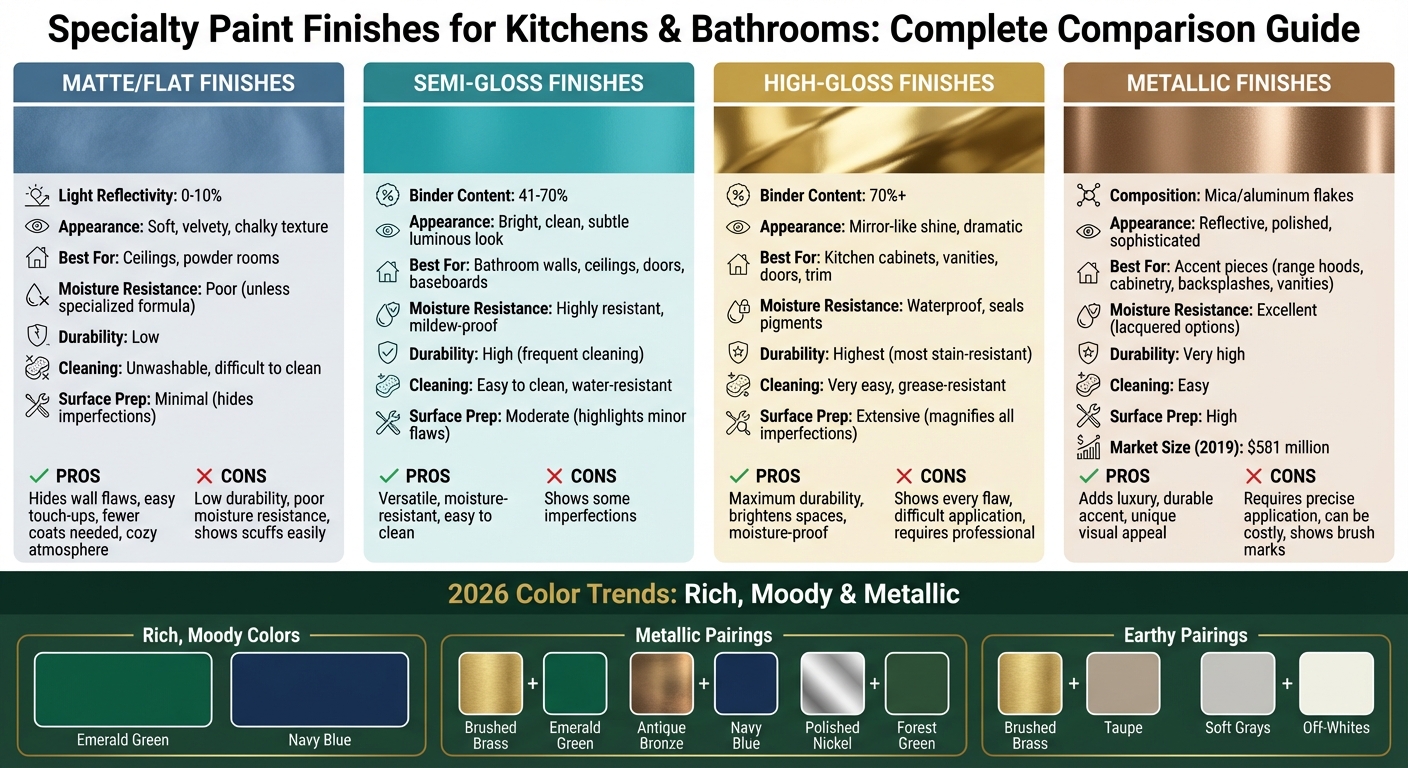
Paint Finish Comparison Guide for Kitchens and Bathrooms
Matte and Flat Finishes
Characteristics and Benefits
Matte and flat finishes are known for their low reflectivity, typically ranging from 0% to 10%. This quality allows them to absorb light, giving surfaces a soft, velvety appearance, sometimes with a chalky texture. The finish achieves this effect thanks to a higher pigment-to-binder ratio, which scatters light rather than reflecting it like gloss paints do.
One of the standout benefits of matte finishes is their ability to hide imperfections. Because they don’t reflect light, they effectively mask surface flaws such as bumps, nail holes, cracks, patches, or uneven textures.
"Matte can create a cozy, calm atmosphere without the distraction of extra shine that high gloss offers. It’s also great if you want to make imperfections less noticeable." – Gideon Mendelson, Founder and Creative Director, Mendelson Group
These qualities make matte finishes particularly appealing for certain areas in kitchens and bathrooms.
Best Applications in Kitchens and Bathrooms
Flat paint works wonders on ceilings by reducing glare and concealing patchwork seams. Matte finishes are especially suited for powder rooms, where the typically lower humidity lets you enjoy their velvety, sophisticated look without worrying about moisture.
When it comes to color selection, matte textures pair beautifully with rich, deep tones or earthy hues. Popular examples include Sherwin-Williams Cracked Pepper, a moody charcoal, and Behr Creamy Mushroom, a warm neutral. These shades enhance the saturated, luxurious feel that matte finishes offer. For areas exposed to higher moisture, durable options like Farrow & Ball Dead Flat or Behr Marquee Interior Matte are excellent choices.
Pros and Cons of Matte Finishes
Matte finishes bring a lot to the table, but they also come with a few trade-offs. Here’s a quick breakdown to help you decide if they’re right for your space:
| Advantage | Disadvantage |
|---|---|
| Excellent at hiding wall imperfections (e.g., bumps, cracks, uneven textures) | Low durability; scrubbing may remove the finish |
| Easy to touch up – new coats blend seamlessly | Poor moisture resistance unless using specialized formulas |
| Often requires fewer coats due to higher pigment content | Unwashable; stains may be difficult to remove without damage |
| Creates a cozy, sophisticated atmosphere without distracting shine | Unsuitable for high-traffic areas prone to splashes and grease |
| Minimizes glare and hides defects on ceilings | Shows scuffs and marks more easily than higher-sheen options |
Matte finishes are a great choice for creating calm, elegant spaces, but they’re best reserved for areas where durability and moisture resistance aren’t top priorities.
sbb-itb-a2baf13
Semigloss and High-Gloss Finishes
Key Features of High-Sheen Finishes
Semigloss and high-gloss finishes are known for their durable, moisture-resistant properties. Semigloss, with a binder content of 41%–70%, offers a soft, luminous look, while high-gloss, with 70% or more binder, creates a dramatic, mirror-like shine. Both finishes form a hard, non-porous seal that effectively repels water, making them ideal for areas prone to moisture.
These finishes are not just about aesthetics – they’re practical too. Their smooth, hard surfaces make cleaning a breeze, allowing for easy removal of grease, food splatters, and soap scum. Additionally, their non-porous nature prevents mold and mildew from taking hold.
"The harder finish of glossy paints offers consistent moisture resistance, ensuring mold has no place to grow." – Shoreline High Gloss
The unique combination of durability and style makes these finishes a go-to choice for specific applications.
Where to Use Them
Semigloss is often the preferred choice for bathroom walls, offering moisture protection with a softer luster compared to high-gloss. It’s versatile enough for walls, ceilings, doors, and baseboards in both kitchens and bathrooms.
High-gloss, on the other hand, shines in areas where maximum durability is needed. It’s particularly well-suited for kitchen cabinets, vanities, doors, and architectural trim. Kerrie Kelly, Creative Director at Kerrie Kelly Design Lab, emphasizes this point:
"For kitchen cabinets, a durable and washable paint like semi-gloss or high-gloss is best. These finishes are resilient against grease and frequent cleaning, preserving the cabinets’ appearance for years."
Another advantage of high-sheen finishes is their ability to brighten small or dimly lit spaces, such as powder rooms or galley kitchens, thanks to their reflective qualities. However, in rooms flooded with natural light, high-gloss can produce noticeable glare, which may not be ideal.
Knowing where these finishes work best helps balance their strengths and challenges.
Benefits and Drawbacks
| Feature | Semigloss | High-Gloss |
|---|---|---|
| Appearance | Bright, clean, and subtle | Vibrant with a mirror-like shine |
| Moisture Resistance | Highly resistant; mildew-proof | Waterproof; seals pigments well |
| Durability | Stands up to frequent cleaning | Toughest and most stain-resistant |
| Surface Preparation | Highlights minor flaws | Magnifies all imperfections |
| Application Ease | Manageable for experienced DIYers | Challenging; best left to pros |
| Best Applications | Walls, ceilings, and trim | Cabinets, doors, and accents |
While both finishes are durable and aesthetically pleasing, their high sheen can be unforgiving. High-gloss, in particular, emphasizes every surface imperfection, making meticulous preparation essential. Erika Woelfel, Vice President of Color and Creative Services at Behr, highlights the versatility of semigloss:
"Semi-gloss is one of the most versatile paint finishes because it is easy to clean and water-resistant, making it a great choice for your bathroom walls and trim."
Meanwhile, high-gloss demands an expert touch. As Dugan’s notes:
"High-gloss is the most challenging finish to apply correctly. It shows every flaw in both the surface and the application technique."
To achieve the best results, surfaces must be prepped with care. This includes filling holes, sanding until smooth, and applying a primer before painting. While semigloss can be managed by confident DIYers, high-gloss is best left to professionals to avoid common issues like brush marks, drips, and bubbles.
Metallic and Specialty Effects
What Are Metallic Finishes?
Metallic finishes mimic the look of metal by incorporating mica or aluminum flakes into the surface. These flakes reflect light, creating a sleek and polished appearance that adds a touch of sophistication to any room. In 2019, the market for metallic acrylic paint reached $581 million, illustrating the rising demand for these durable, high-end finishes.
Specialty effects like metallic lacquers offer a glossy, seamless surface that resists moisture and stands up to wear and tear – making them a smart choice for areas like kitchens and bathrooms. Their reflective quality also enhances smaller spaces, such as bathrooms, by bouncing light around and creating an illusion of more space. These unique properties make metallic finishes both practical and stylish for various applications.
Recommended Applications
Metallic finishes work best as statement accents. In kitchens, they can elevate range hoods, cabinetry, backsplashes, or islands. In bathrooms, they shine on vanities, mirror frames, or even hardware like faucets and towel racks.
For example, designer Fabian Freytag crafted a kitchen in Berlin with brass cabinetry that perfectly complemented a walnut island designed for social cooking. Similarly, architect Travis Walton and designer Simone Haag transformed a Melbourne home by using patinated brass cabinetry alongside a striking green stone island and black marble backsplash. These examples highlight how metallic finishes can transform functional spaces into luxurious design showcases.
"Metallic treatments can add a dash of flair and glitz to cabinets or accent pieces with their shimmering, shiny surfaces… lacquered woodwork is moisture-resistant and incredibly durable." – Bryan Turner Kitchens
Popular Color Pairings
Looking ahead to 2026, metallic accents are trending alongside rich, dramatic colors. Some standout pairings include brushed brass with emerald green, antique bronze with navy blue, and polished nickel with forest green.
For a cozier aesthetic, brushed brass pairs beautifully with earthy tones like taupe, soft grays, and off-whites. On the other hand, cooler metals like polished nickel pop against crisp whites and light neutrals, allowing their reflective quality to take center stage.
Best Bathroom Paint: The Science of Steam, Mold, and Recovery
How to Choose and Apply Specialty Finishes
For luxury kitchens and bathrooms, picking the right specialty finish is only half the job. Proper application and upkeep are just as important to ensure your space looks stunning for years to come.
Preparation and Priming Tips
Getting the surface ready is key to making your finish last. Start by thoroughly cleaning the area to remove grease, dust, and soap scum – these can interfere with paint adhesion. Using a high-quality primer is essential, especially in moisture-heavy areas like bathrooms, as it seals the surface and helps the paint stick better. For bolder colors and better coverage, consider having your primer tinted to match the final paint color.
If you’re working in a bathroom with poor ventilation, ask for a mildew-resistant additive to mix into your paint. This extra step can help keep mold at bay. Also, make sure the room is well-ventilated during and after painting to allow the surface to dry thoroughly and prevent humidity from getting trapped under the paint. Once the prep work is done, it’s time to focus on applying the finish with care.
Application Techniques
After priming, how you apply the paint makes all the difference. The method you use affects the final look. For a smooth, professional appearance on cabinets and vanities, spraying is your best bet. On walls, rolling works perfectly fine. In areas prone to moisture, applying at least two coats ensures even coverage and durability.
Before committing to a full application, test paint samples on a small section of the wall under different lighting conditions. This step helps you see how the sheen interacts with the light in your kitchen or bathroom. Keep in mind that high-gloss paints, while more durable, take longer to cure because of their additive content.
Maintenance for Longevity
Once the finish is in place, maintaining it properly will help it hold up over time. Regular care can significantly extend its lifespan. Clean surfaces with a mix of lukewarm water and mild dish soap using a microfiber cloth or soft sponge. Steer clear of abrasive cleaners or rough materials, as these can damage the finish or create shiny spots (known as "burnishing") on matte surfaces.
"The glossier the paint, the more it can reflect light and deflect moisture instead of absorbing it." – Shoreline High Gloss
If you spot mold or mildew, tackle it immediately with a solution of water and white vinegar. To prevent moisture buildup, always run exhaust fans during and after using the space, and wipe down walls after heavy steam exposure. For high-gloss finishes, avoid heavy cleaning or scrubbing during the first few weeks after application to allow the paint to fully cure.
Conclusion
Specialty paint finishes can transform kitchens and bathrooms into stunning, high-end spaces. The right finish does more than just look good – it protects surfaces and makes maintenance easier. High-gloss finishes provide durability and amplify light, semi-gloss works well in humid environments, and matte finishes add depth while masking flaws.
The trends for 2026 – ranging from rich emerald greens and deep navy blues to metallic lacquers and textured finishes – showcase the versatility of specialty paints. Whether it’s the sleek, mirror-like effect of high-gloss cabinetry or the understated elegance of matte walls, these options open up endless design opportunities. Achieving these looks, however, requires precision and careful preparation.
"The quality and craftsmanship that went into the design are reflected in the finishes found in a luxury kitchen, which go beyond simple aesthetics." – Bryan Turner Kitchens
Getting the best results with specialty finishes starts with proper preparation and skilled application. High-sheen paints, for instance, can highlight surface imperfections, making expert craftsmanship essential for a flawless outcome. From thorough sanding and priming to choosing the right products for moisture and heavy use, preparation plays a key role in the finish’s durability and appearance.
For projects where quality is non-negotiable, 26 Painting, LLC provides professional cabinet repainting and interior painting services tailored to luxury spaces. Their attention to detail and dedication to excellence ensure a finish that is both beautiful and long-lasting.
FAQs
What paint finish is best for a steamy bathroom?
The best paint finish for a steamy bathroom is semi-gloss. It stands up well to moisture, handles the challenges of high humidity, and is easy to clean. This makes it a great choice for protecting your walls while giving them a sleek and polished appearance.
Can I use matte paint in a kitchen or bathroom without mildew issues?
Matte paint can be used in kitchens and bathrooms, but it doesn’t handle moisture as well as other finishes. In areas with high humidity, it might peel, crack, or even encourage mold growth unless the paint is labeled as moisture-resistant or mold-resistant. For long-lasting results, opt for a finish specifically made to endure these challenging conditions.
Should cabinets be sprayed or brushed for a high-gloss finish?
Spraying is often the go-to method for achieving a sleek, high-gloss finish on cabinets. It delivers a smooth, professional-quality result without the streaks or uneven textures that brushes can leave behind. This technique creates a durable, polished surface, making it perfect for high-gloss applications.