
I’d budget $200–$600 for DIY cabinet-painting supplies or $1,000–$6,500 or more for professional work. Before comparing prices, count your doors, drawers, and cabinet surfaces – and note any repairs.
The choice comes down to cash, time, and finish quality:
- DIY: Lower upfront spending, but expect about 30–60 hours of work, often spread across several weekends. Tools, rentals, and mistakes can add costs.
- Professional: Higher upfront spending, with labor often making up 70%–85% of the bill. Most projects take 2–5 days, though repairs and drying can extend the schedule.
I’d compare the same scope, not just the totals: prep, primer, paint, repairs, hardware handling, cleanup, taxes, and warranty terms. Cabinet count, surface condition, coating choice, and local labor rates all affect the price.
<u>Plan for drying time, too.</u> Reassembly may take 24–72 hours, while full cure can take 7–30 days, depending on the coating. For homes built before 1978, check for lead paint before sanding.
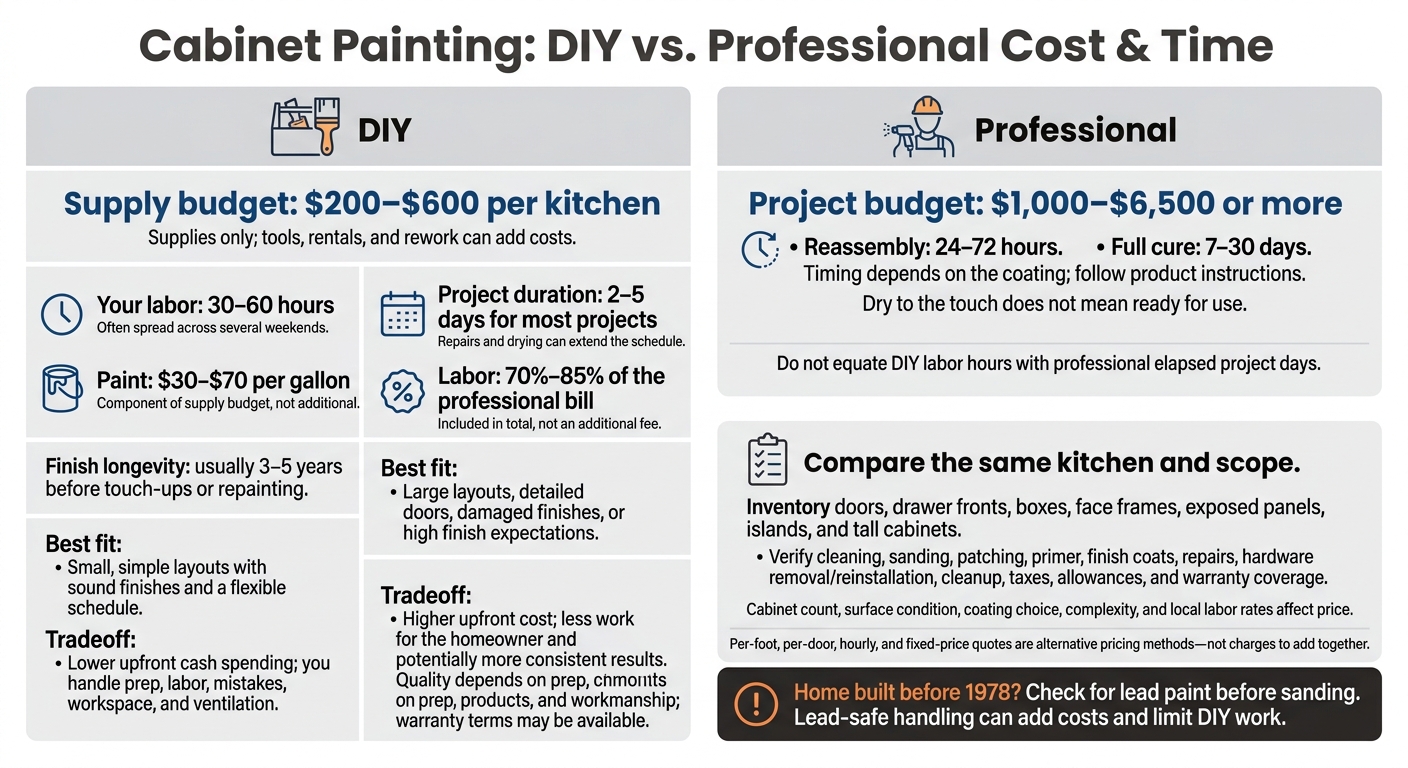
Kitchen Cabinet Painting Costs: DIY vs. Professional
1. Professional Cabinet Painting
Total Project Cost
Compare scope, not just price. A professional quote should break out labor, prep, primer, finish coats, and warranty coverage. Get a written scope listing every included step, the cabinet count, and the condition of the surfaces. This makes it easier to compare the quote with DIY supply costs in the next section.
Preparation and Equipment
Prep accounts for most of the price. The quote should list cleaning, sanding, patching, priming, and masking. Damaged surfaces need more prep labor.
Check whether hardware removal, reinstallation, and minor repairs are included or billed separately. The written scope should also cover masking removal, cleanup, and debris disposal.
Labor and Project Time
Get the start date, completion date, and drying-time assumptions in writing. More cabinets and repairs mean more labor. Drying time affects the schedule, but it isn’t necessarily billable labor. These details help explain why two jobs that look similar can have very different prices.
Finish and Workmanship Coverage
Check the coverage before signing. Confirm whether the quote includes a written warranty or touch-up coverage. Ask which finish defects are covered, how long coverage lasts, and whether it pays for both corrective labor and materials.
sbb-itb-a2baf13
How Much Does It Cost To Paint Kitchen Cabinets? (DIY or Hire A Pro?)
2. DIY Cabinet Painting
Painting cabinets yourself shifts the cost from paid labor to supplies, your time, and the risk of rework.
Total Project Cost
Budget for supplies separately from your time. Paint typically costs $30–$70 per gallon, while DIY cabinet supplies usually total $200–$600 per kitchen, depending on cabinet count and product quality. Budget near the low end for a small kitchen, the middle for a medium kitchen, and the high end for a large kitchen or one that needs repairs.
Include brushes, rollers, trays, drop cloths, ladders, and equipment rentals. Set aside extra money for replacement supplies and possible rework.
DIY means spending less cash, but you’ll put in your own hours. Use the supply range, time commitment, and rework risk when comparing your budget with a professional quote.
Preparation and Equipment
Prep takes up much of the DIY budget and schedule. Clean, sand, patch, and prime before painting. Choose quality brushes and rollers to help reduce streaks. Remove and label doors, drawers, hinges, and hardware before you start.
Labor and Project Time
Your time is part of the cost. A DIY cabinet project can take several weekends. Estimate prep, painting, and cleanup time separately. Cleanup also extends the time your kitchen is out of use.
Finish Longevity and Rework
DIY paint jobs usually last 3–5 years before they need touch-ups or repainting. Poor prep or application can leave streaks and chips – and mean doing some of the work again.
What Affects Cabinet Painting Costs and What Is Included
Compare quotes based on the same kitchen and scope of work, not just the headline price.
Total Project Cost
Per-foot, per-door, hourly, and fixed-price quotes are different ways to price the job – not charges to add together. Confirm which model the painter uses and which surfaces the price covers.
| Cost driver | Budget impact |
|---|---|
| Pricing method | Compare totals for the same cabinet count and scope, rather than unlike unit rates. |
| Painted area | Count doors, drawer fronts, boxes, face frames, exposed panels, and islands. More surface area means more labor and materials. |
| Complexity and location | Complex work, difficult access, and higher local rates increase labor costs. |
| Surface condition and prep | Stripping, repairs, and extra prep to help paint adhere can cost more. |
| Coating quality | Cabinet-grade coatings and specialty finishes affect material and application costs. |
| Hardware handling | Removal, labeling, and reinstallation may be included or billed separately. |
| Equipment rental | Renting sprayers, drying racks, respirators, and ventilation equipment can cut into DIY savings. |
| Labor | Labor commonly accounts for about 70%–85% of the professional total. |
Older homes also need a safety check. Homes built before 1978 may require lead-safe handling, which can add costs and limit DIY work.
What the Quote Must Include
Ask the painter for an itemized written scope, then check it line by line. A total price alone won’t tell you what’s covered.
| Quote item | What to verify |
|---|---|
| Labor | Which surfaces are included – including interiors and both sides of doors – plus the application method and cleanup. |
| Materials | The specified primer, cabinet coating, sheen, coat count, and any specialty-finish upgrades. |
| Repairs | Which repairs are included and whether stripping or extra adhesion work costs more. |
| Hardware removal/reinstallation | Whether doors, drawer fronts, hinges, knobs, and pulls will be removed and reinstalled. |
| Taxes | Whether the total includes applicable tax. |
| Allowances | How much is set aside for uncertain work or materials, and whether those amounts can increase. Tax, allowances, and selected upgrades can increase the final total. |
| Warranty coverage | Which defects are covered, how long coverage lasts, and whether it includes corrective labor and materials. |
Professional vs. DIY: Pros and Cons
Cost is only part of the decision. DIY saves on labor, but you take on the work, time, and risk. Paint and supplies may run $200–$600, before buying tools, setting up a workspace, or fixing mistakes. Expect to put in 30–60 hours of labor, with drying time stretching the project further.
The tradeoff: spend less cash, but invest more time and effort – with finish quality depending on your work.
| Approach | Advantages | Disadvantages | Best-fit situation |
|---|---|---|---|
| Professional painting | Less work for you; specialized equipment; potentially more consistent finish; written scope or warranty terms may be available | Higher upfront cost; contractor scheduling; quality depends on prep, products, and workmanship | Large layouts, detailed doors, damaged finishes, or high finish expectations |
| DIY | Lower cash cost; full control of your schedule | You handle prep, labor, and mistakes; tools cost extra; workspace and ventilation requirements | Small, simple layouts with sound finishes and a flexible schedule |
DIY usually makes sense for simple layouts with finishes in good condition. Professional work is often a better fit for damaged, detailed, or heavily used cabinets. Before hiring, review sample work, check references, and ask about the coating system.
Plan for kitchen downtime either way. Depending on the coating, reassembly may take 24–72 hours, while full cure may take 7–30 days. Dry to the touch doesn’t mean ready for use. Follow the product’s instructions when planning reassembly and returning cabinets to use.
How to Budget and Compare Local Estimates
Start by counting every door and drawer front, along with cabinet boxes, side panels, islands, and tall cabinets. Note any peeling, damage, or repairs needed. Use the same inventory for every local estimate you request.
Ask for a written estimate that lists cleaning, sanding, patching, primer, finish coats, exclusions, labor, materials, and warranty terms. That lets you compare quotes for the same scope of work.
Treat per-door and linear-foot prices as rough checks, not your full budget. Set aside extra money for repairs. If you’re doing the work yourself, include tools, rentals, waste, and rework in your costs. When comparing estimates, check that each covers the same inventory, prep level, and warranty terms.
FAQs
How can I estimate costs for my kitchen size?
Professional cabinet painting typically costs $1,500 to $10,000, with many midsize kitchens falling between $4,500 and $7,000. Your price depends on how complex your layout is, how many cabinet panels need painting, and what condition the surfaces are in.
Ask a professional for a detailed, line-item estimate that breaks down labor, material quality, and prep work, including sanding or repairs. This gives you a clear budget baseline before work starts.
Can laminate cabinets be painted affordably?
Painting laminate cabinets can be affordable, but a finish that lasts takes proper prep. Even if a paint promises little prep work, you’ll typically need thorough cleaning, sanding suited to laminate, and a high-adhesion primer made for the surface.
Quality materials and professional labor add to the upfront cost. But proper preparation helps the paint resist peeling and everyday wear, giving you better value over time.
Which cabinet-painting costs can I safely reduce?
Brush-and-roll painting can cut upfront costs by avoiding the $350 to $500+ expense of professional-grade spray equipment. It also takes less masking and prep time than spraying. You can save more by doing the cleaning and light sanding yourself, but don’t skimp on prep – it helps prevent early paint failure.
The trade-off? These savings take plenty of your time, and you may end up with visible brush marks or uneven textures. Focus your DIY work on smaller, less visible spaces.