
I’d paint a door that works well but looks worn – and replace one with damage that surface repairs can’t fix. Before choosing, I’d tighten loose hinges and check the latch. A hardware fix may be all you need.
Here’s what I’d compare:
- Condition and fit: Paint covers minor wear, not warping, swelling, or core damage. Fix moisture problems first.
- Door type and privacy: Hollow-core, solid-core, and solid-wood doors differ in repair options, weight, and sound control.
- Replacement scope: Choose a slab for a sound, square frame; consider a prehung unit when the frame needs replacing.
- Total cost and downtime: Compare prep, repairs, hardware, finishing, labor, cleanup, and drying or installation time – not just paint and door prices.
Quick Comparison
| Factor | Paint | Replace |
|---|---|---|
| Best use | Sound door with cosmetic wear | Damaged door or a change in style, fit, or privacy |
| Work involved | Clean, repair, prime, and coat | Measure, fit, install, and finish |
| Sound control | Little change | A heavier, properly fitted door may help |
| Frame work | Keeps the existing frame | Slab keeps it; prehung replaces it |
| Timing | Prep, drying, and curing | Ordering, installation, and possible trim repairs |
| Cost check | Include all prep and coatings | Include hardware, fitting, disposal, and finishing |
My rule: <u>check function before choosing a finish</u>. For homes built before 1978, I’d also confirm lead-safe procedures before sanding, scraping, or removing doors and trim. And I’d get a written assessment and matching estimates before work starts – because dry to the touch isn’t the same as ready for daily use.
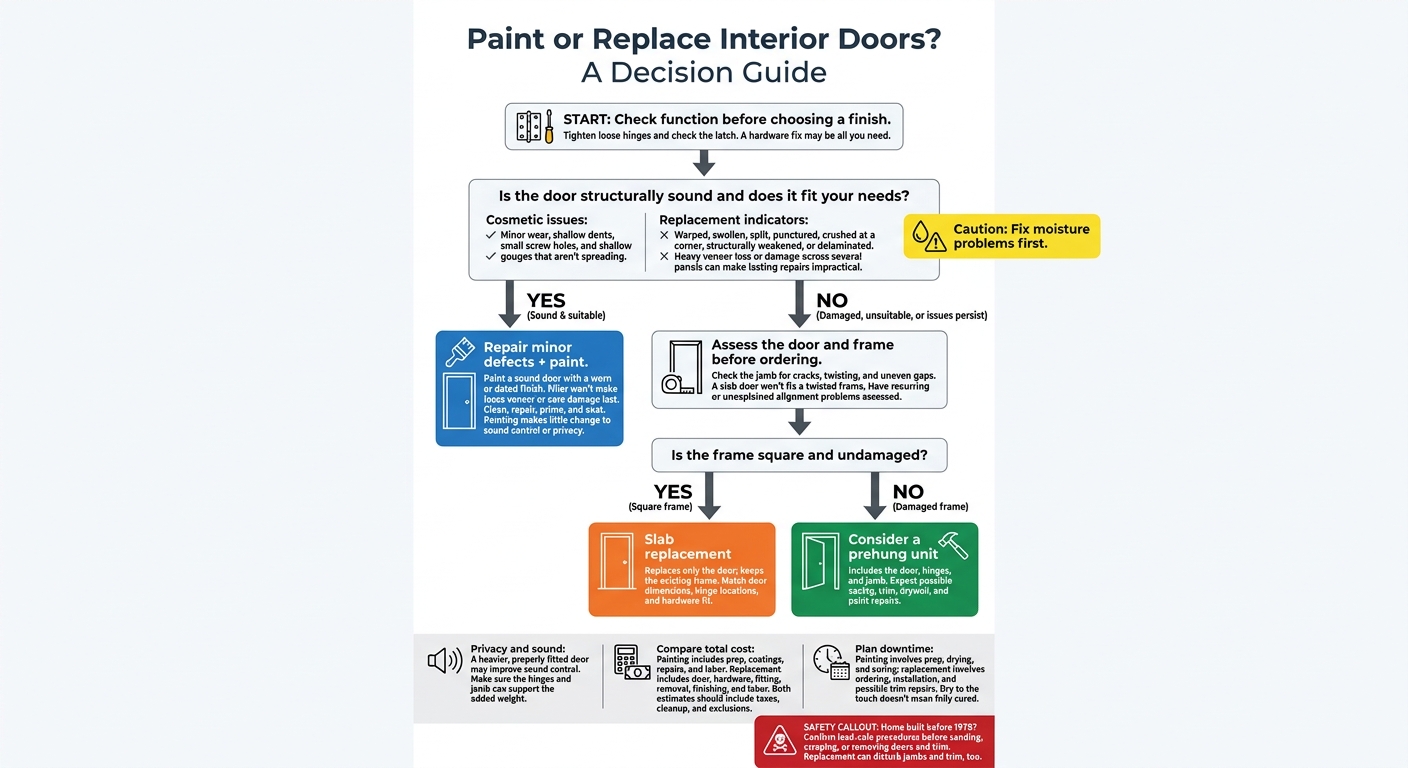
Paint or Replace Interior Doors? A Decision Guide
Easy Fix: How to paint an interior door like a pro
sbb-itb-a2baf13
When to Paint Interior Doors
Paint an interior door when its frame, fit, and function are sound, but the finish looks dated or worn. If the problem is mostly cosmetic, painting is the faster fix.
Decide Whether Surface Repairs Are Enough
Use a compatible filler for shallow dents, small screw holes, and shallow gouges that aren’t spreading. Let the filler dry, sand it flush, and spot-prime each repair so it won’t absorb paint unevenly.
Keep repairs cosmetic: filler won’t make loose veneer or core damage last. Painting makes sense only if the door still fits your needs.
Prepare, Prime, and Paint
Remove the door, label the hinges, and take off the hardware. Before sanding an older coating whose makeup is unknown, assess it for lead and follow lead-safe procedures.
Clean off grease, fingerprints, wax, soap residue, and dust. Rinse as directed and let the surface dry. Then remove loose paint, lightly sand rough or glossy areas, and vacuum or wipe away the dust.
Prime bare wood, filler, stains, and slick finishes to help paint stick and cover evenly. Use a stain-blocking primer for stains or tannin bleed and a bonding primer for slick surfaces. Apply thin, even coats of durable door-and-trim enamel, usually in satin or semi-gloss, with a quality brush or mini-roller. Keep paint off hinges and latch mechanisms.
Follow the label’s drying and recoat times. Dry to the touch doesn’t mean fully cured. Give the paint enough drying time before reinstalling hardware or closing the door, and wait until the finish has cured before heavy cleaning. Ventilate while painting and for at least 72 hours afterward, using exhaust fans that vent outdoors.
If the door has structural damage, fits poorly, or provides too little privacy, replacement is the better next step.
When to Replace Interior Doors
Replace doors that are warped, swollen, split, punctured, crushed at a corner, structurally weakened, or delaminated. Heavy veneer loss or damage across several panels can also make lasting repairs impractical. Fix the moisture source before installing a new door. A swollen bottom edge may signal water inside the core.
Assess Door Function, Privacy, and Fit
Paint won’t solve problems with structure, fit, or how a door serves the room. If the door still rubs or won’t latch after basic adjustments, check the jamb for cracks, twisting, and uneven gaps. A slab door won’t fix a twisted frame. Have the opening assessed before ordering, especially if alignment problems keep returning or you don’t know what’s causing the movement.
A hollow-core door may work for a closet, while a heavier solid-core door can provide better sound control for a bedroom, home office, or bathroom. Make sure the hinges and jamb can support the added weight. Check visual privacy and swing direction, too. Match the door’s weight and privacy level to the room, and use privacy hardware that still allows ventilation and emergency access.
Choose a Slab or Prehung Door
A slab replaces only the door and works best when the jamb is square and undamaged. Measure the existing door’s width, height, thickness, hinge locations, latch-bore position, and backset – the distance from the door’s edge to the bore center. Interior doors are commonly 1-3/8 inches thick. Any hinges and handles you reuse must fit the new door. Installation may involve trimming, cutting hinge recesses, drilling, and touching up paint.
A prehung unit includes the door, hinges, and jamb, making it a better choice for a damaged or twisted frame. Measure the rough opening at several points and use the smallest dimensions. Confirm jamb depth, swing direction, and clearance above the finished floor, leaving room for shims and adjustments. Expect to remove the casing, align the frame, and possibly repair trim, drywall, and paint. Once you know which option fits the opening, compare material and labor costs.
Painting vs. Replacement: Costs, Work, and Results
If your door is still sound, compare total installed cost, downtime, and results. Painting keeps the door, frame, and hardware in place. Replacement can improve fit, privacy, and sound control if the current door falls short.
The table below separates appearance updates from changes that improve how the door works.
| Factor | Painting | Replacing | Best choice when |
|---|---|---|---|
| Cost | Prep, coatings, repairs, and labor. | Door, hardware, fitting, removal, finishing, and labor. | Paint a sound door with a worn finish; replace it when repair costs approach replacement cost. |
| Prep and time | Surface prep, coats, drying, and curing. | Ordering, removal, fitting, and finishing. | Paint for an appearance update; replace to correct function. |
| Surface results | Updates color and minor wear. | Changes style and material and replaces damaged surfaces. | Paint a dated finish; replace severe damage or an unwanted design. |
| Structural fixes | Does not fix warping, twisting, or poor fit. | Corrects door defects; frame problems may require a prehung unit. | Replace for structural or fit problems. |
| Hardware fit | Keeps existing hardware locations. | May require matching new bores and hinges. | Paint if the hardware layout works; replace if it doesn’t. |
| Sound and privacy | Makes little change in performance. | Heavier doors can improve sound control when properly fitted. | Replace for better privacy or sound control. |
| Frame effects | Leaves the frame in place. | Prehung replacement may require trim and jamb work. | Paint or use a slab replacement with a sound frame; choose prehung for a damaged jamb. |
| Durability | Depends on a stable surface and proper prep. | Provides new construction; performance depends on installation. | Paint stable material; replace failing material. |
| Disruption | Door is unavailable during prep and drying. | Removal, fitting, and possible trim work add dust and noise. | Paint for less disturbance; replace when function needs improvement. |
Once you know which option fits your needs, compare written estimates with matching scopes.
Compare Estimates for the Same Work
Ask for a painting estimate specific to your project. It should state the door count, dimensions, material, sides and edges covered, repairs, prep, primer, finish coats, and hardware handling.
A replacement estimate should also cover the door unit, delivery, fitting, frame condition, trim repairs, disposal, and finishing. Both estimates should list taxes, cleanup, and exclusions.
Match door type, prep, labor scope, and finish level when comparing estimates for each option. Labor costs vary by market, access, and frame work. Before using published prices for your budget, check their dates and what’s included. National ranges may not match local, all-in costs, and material-only prices aren’t a fair comparison with completed painting work.
Plan Around Drying and Installation
For painting, schedule preparation, recoating, and full curing separately. Dry to the touch doesn’t mean ready for hardware or tight closing. Follow the coating instructions, since humidity and low temperatures can extend drying time. Ask whether the doors will be painted in place or removed – and where they’ll dry.
For replacement, confirm availability and fitting needs before scheduling removal. Ask when each room will be without a working door and whether finishing or trim repairs will require another visit.
Stage bedroom and office work so one private room stays usable, or arrange a temporary door with the installer. Confirm access needs before work begins, and use these timing details to decide which option fits your schedule.
Conclusion: Paint, Repair, or Replace?
Choose based on the door’s condition and fit, along with cost, work, and expected results. Paint sound doors, repair minor defects, and replace doors that remain damaged or unreliable. Address loose hinges and latch problems before making the call. If both the door slab and frame need correction, use a prehung unit.
Look beyond appearance. Factor in privacy, fit, the full scope of work, and your budget.
Request a Door Assessment Before Work Starts
Get a written assessment before work starts. Request a written estimate from 26 Painting, LLC covering interior door preparation, minor surface repairs, priming, and painting – or an assessment of whether replacement should come first. Ask the company to spell out the recommended scope and which repairs are included.
If your home was built before 1978, disclose its age before anyone sands or scrapes, and confirm that 26 Painting, LLC is EPA Lead-Safe Certified. Replacement can disturb jambs and trim, too, so lead precautions still apply.
FAQs
How can I tell if my door damage is only cosmetic?
Start by wiping the surface with a damp sponge to rule out dirt or smudges. Cosmetic damage usually means nail holes, small scuffs, or chipped corners measuring a few inches or less across. Shine a light at a low angle to spot uneven textures.
Damage is superficial only if the door is structurally sound, works properly, and has no signs of moisture damage, wood rot, or active insect infestations.
Can I paint over a previously stained door?
Yes, but proper surface prep is key to a lasting finish. Clean the door thoroughly to remove old polish, wax, grease, and dirt. Then sand it lightly to help the paint stick.
Apply a high-quality primer to seal the wood and keep stain or tannins from bleeding through. If you’re unsure whether the products are compatible, try a small test patch to check adhesion before painting the whole door.
Should I update all my interior doors at once?
It depends on your doors’ condition and the look you want. If they’re structurally sound but have outdated finishes or minor surface damage, painting them all at once can give them a consistent, updated look. Doors that are warped, structurally damaged, or don’t work properly may need replacement instead. Updating them together keeps the appearance uniform and helps you coordinate repairs or replacements.